
Research
The Missing Market for Creative Utility
Why the artists whose work matters most are the first to be told to stop, what that costs the places they come from, and why only long-horizon capital can change it.
The economic theory behind the Creative Wealth Fund model, by Derek Morrison.
Economic theory. Published March 2026. SSRN 6379120.
Download the paperPDF, 1.7 MBAuthor ORCID
On this page
More work, fewer livings.
Every year more music is released, more films are made and more books are published than ever before. Economists have read that abundance as evidence that creative markets work. The paper argues the reading is wrong, and the people making the work already know it.
A song streamed today earns its artist between about a twentieth and a tenth of a cent.1 It takes between 1,500 and 2,500 streams to earn what one album sale once did.1 Original films took 73 percent of the US box office in 1984 and under a third in 2023.2 In 2000, one of the ten highest-grossing films in the US was a franchise. In 2022, all of the top eleven were.2
Output measures what is made and sold. It says nothing about what a work goes on to create once the sale is over, which is where most of the value of creative work lies, or about whether the conditions to make the most valuable work are still there.
More is being made than ever. Less of it is built to last.
Value after the sale
When you buy a ticket or stream a song, you pay for one moment of enjoyment. The work keeps going. It spreads from person to person, and over time it shapes how a place is seen and what gets made next. The paper calls this creative utility, and it compounds: the more people who share a cultural reference, the richer each new encounter with it becomes.
For the artist, all of this arrives after they have been paid. The Shawshank Redemption took $16 million at the US box office against a $25 million budget in 1994. Thirty years on it is among the most valuable films of its generation.3
The value is large. It drives activity in tourism, property and the industries around them, which profit from a cultural atmosphere they did not create. In 2005 Banksy painted nine images on the West Bank barrier that were never sold and could not be. Within days they had traveled the world, and the value they created was real and entirely public. Bristol’s visitor economy, worth around £2.46 billion a year, owes a substantial part of its identity to street art whose makers were paid nothing for it.6
The same is true of whole regions. We go to Tuscany for the art and the architecture. Nobody makes the journey to see the Medici bank statements.
Almost all of this value arrives after the sale, and none of it returns to the people who made it.
£2.46bnBristol's visitor economy each year, much of its identity built on street art whose makers were paid nothing for it.Morrison (2026), section 2.3
The missing market
If the value is this large, why has no market grown up to price it? The answer lies in how creative work is paid for. The creator’s claim ends at the moment of sale. Payment is final, and nothing available at that moment can price value that does not yet exist and may take decades to arrive.
The system cannot correct itself either. No single artist, label, studio or platform can change the terms on its own, because each is bound by the same arrangement as everyone else. A market for this value cannot assemble from within the system it would replace, so it stays missing unless something outside that system holds the value instead. The paper shows this formally: settling payment at the moment of sale closes off any claim on later value, and no participant can profitably break from the arrangement alone, which is why it has held for so long.
Download the paperPDF, 1.7 MB
A missing marketIn economics, a market that would clear if it could form. Here the obstacle is structural: the claim to future value is closed off at the moment of sale.
The best leave first
In 1970 the economist George Akerlof showed how a market can drive out its own best goods. When buyers cannot tell good used cars from bad ones, the owners of good cars stop selling. Creative economies face a version of the same problem with a harder edge. Here the quality is often plain to see. The market simply has no way to pay for it, so it sends creators the wrong signal, and they respond to it.
Not all creative work behaves the same way over time. The paper sorts it by two things: how easily it can be copied, and the price it reaches when it is sold. Viral work is easy to copy and priced high at launch. It peaks early and fades, and the market reads it well. Slow-burn work is hard to copy and priced low at sale. It sits near zero through a long quiet, then rises through recognition to become the most valuable of all.
The signal sorts artists the wrong way round, and the paper traces it through three channels.
The first to leave are the ones who would have lasted longest. An artist making slow, original work receives the weakest signal of anyone, because almost all of that work’s value lies years ahead. Stopping is the rational response, and the people who stop first are the ones whose work would have mattered most.
Those who stay learn to make what the system can see. The first week of streams, the opening weekend, the first thirty seconds of a song. The average US hit has lost almost a minute since 2000.4 Studios still make original films in roughly the same numbers, but the budgets, marketing and release dates go to the franchise.2 Each choice is sensible. Together they shift a whole culture toward what can be counted quickly.
The next generation never learns the craft. Young artists watch all of this before deciding what to learn. Original, difficult work looks like a path that leads nowhere, so fewer of them ever acquire the skills it takes. This is the loss that is hardest to reverse. A craft a generation never learned cannot be called back when the market changes its mind.
Even success does not escape it. Artists at the very top now earn their living on the road: in 2018 Taylor Swift took 91 percent of her income from touring and under 6 percent from streaming.5 Further down, Kate Nash has described sold-out UK tours that lost money once the bus, the crew and the fees were paid.5 The work that built the audience is the part that pays least.
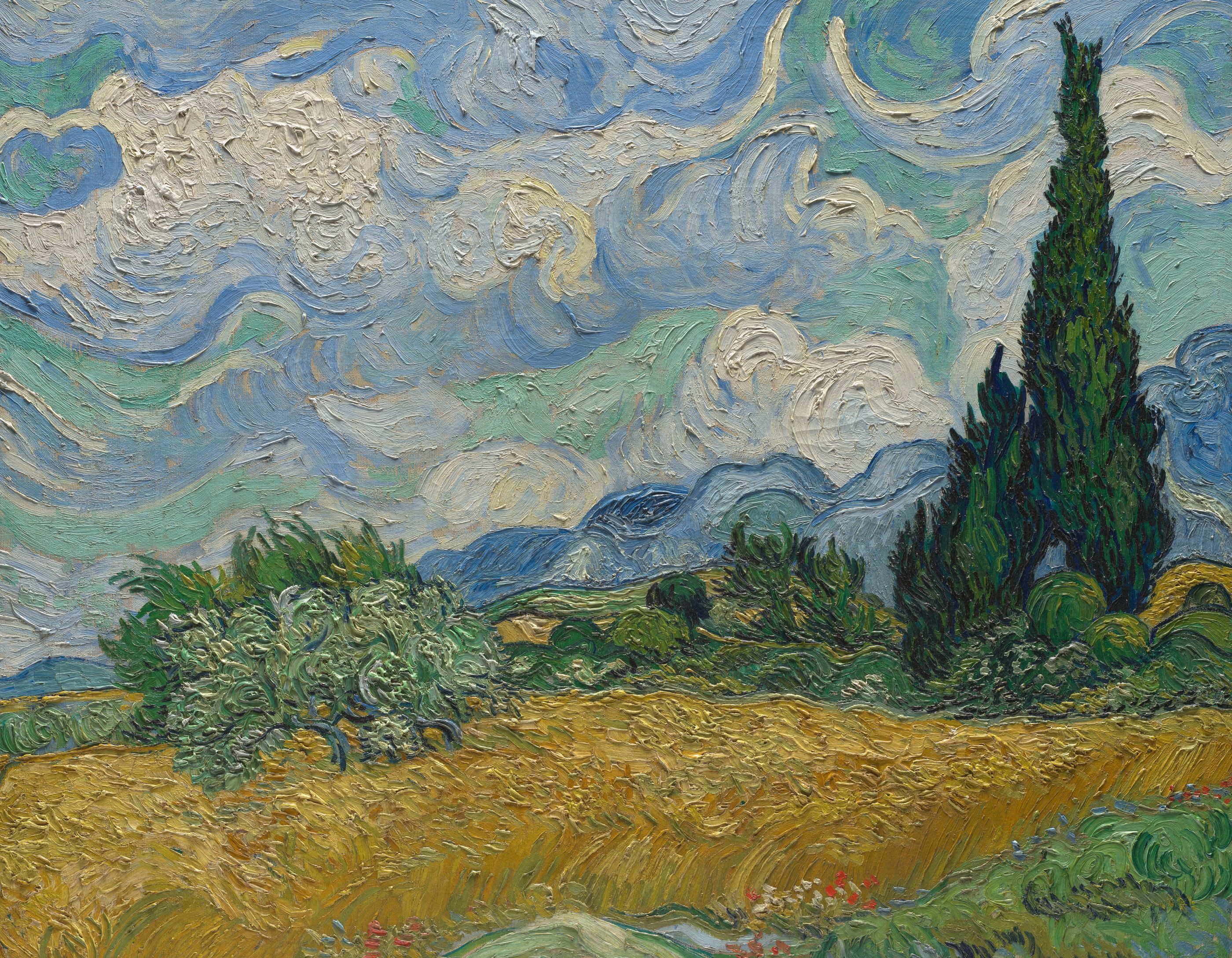
The survivors we celebrateVan Gogh barely sold in his lifetime. He kept painting because his brother Theo paid him to. We know his work because Theo existed. The market shows us its survivors. It has no way of counting the painters of equal promise who had no Theo, read the signal correctly and became something else.
How different kinds of work create value over time
Show the values as a table
| Kind of work | Launch | The long quiet | Recognition | Maturity |
|---|---|---|---|---|
| Slow-burn (hard to copy, low price at sale) | Near zero | Near zero | Low | Medium |
| Sustained (hard to copy, high price at sale) | Low | High | High | High |
| Viral (easy to copy, high price at sale) | Medium | Medium | Low | Near zero |
| Noise (easy to copy, low price at sale) | Near zero | Near zero | Near zero | Near zero |
A thinner inheritance
Over generations the effect compounds, and nothing inside the system reverses it. The creators who could produce the most valuable work leave, and those who stay drift toward work the market can measure. The generation that follows learns its craft under the same signal.
For a region, the cost shows up as people. Fewer of the artists who could have defined its next decade stay. Fewer original works are made there. The young people who might have learned the craft learn something else.
Think of a region’s creative inheritance as a sourdough starter. Each generation draws on it and feeds a richer culture forward. When the market stops signaling that slow, original work is worth making, the starter weakens. Output still rises, and the culture in each loaf is thinner.
Past a tipping point, more output can no longer make up for what has been lost. That is why the abundance the paper begins with was never the evidence of health it appeared to be.
Output still rises. The culture in each loaf is thinner.
More made, less carried forward
Show the values as a table
| Series | First generations | Before the tipping point | At the tipping point | After it |
|---|---|---|---|---|
| New cultural value each generation | Medium | High | Very high | Low |
| Output | Low | Low | Medium | High |
| Creative inheritance | Very high | High | Medium | Low |
Patient capital
The chart above shows the problem at its simplest. The most valuable creative work takes the longest to show its value, often longer than a career and sometimes longer than a lifetime.
Everyone who pays for creative work today works to a short horizon. Buyers pay for the moment of use. Labels, studios and platforms answer to the next quarter and the opening weekend. Most private investment funds run for a fixed term and must sell before slow-burn work has begun to rise. Grants are spent in the year they are given.
Only one kind of institution is designed for horizons measured in generations: the permanent fund. In 1990 Norway built one to hold the wealth of its oil for its whole population, and it invests with no date by which it must sell. That is the gap a Creative Wealth Fund is designed to fill. It is permanent capital matched to the horizon of creative value. It can stay with a work or an artist through the long quiet and share in what comes after, and in doing so it sends the right signal back to the artists deciding whether to keep going.
The most valuable work takes the longest to pay. Permanent capital can wait.
1990Norway establishes the Government Pension Fund Global by law, to hold the wealth of its oil for its whole population, with no date by which it must sell.Government Pension Fund Global
The argument
The paper sets out its argument in four parts. It establishes the scale of the value creative work generates after the sale and names the stock of culture that value builds. It shows formally why a market for that value cannot form under today’s payment systems. It traces three independent channels through which the wrong price signal thins a creative economy over generations, and why nothing inside the system corrects it. And it tests the argument against two cases, the move to music streaming and four decades of franchise concentration in film, with identification strategies and testable predictions for further research.
Questions
- What is creative utility?
- When you buy a ticket or stream a song, you pay for one moment of enjoyment. The work keeps going. It spreads from person to person, and over time it shapes how a place is seen and what gets made next. The paper calls this creative utility, and it compounds: the more people who share a cultural reference, the richer each new encounter with it becomes.
- What is the missing market for creative utility?
- The creator's claim ends at the moment of sale. Payment is final, and nothing available at that moment can price value that does not yet exist and may take decades to arrive. A market for this value cannot assemble from within the system it would replace, so it stays missing unless something outside that system holds the value instead.
- Why can the market not correct itself?
- No single artist, label, studio or platform can change the terms on its own, because each is bound by the same arrangement as everyone else. Settling payment at the moment of sale closes off any claim on later value, and no participant can profitably break from the arrangement alone, which is why it has held for so long.
- What does the missing market do to artists and regions?
- An artist making slow, original work receives the weakest signal of anyone, because almost all of that work's value lies years ahead. The people who stop first are the ones whose work would have mattered most. For a region, the cost shows up as people: fewer of the artists who could have defined its next decade stay.
- Why does it take patient capital to change this?
- The most valuable creative work takes the longest to show its value, often longer than a career and sometimes longer than a lifetime. Only one kind of institution is designed for horizons measured in generations: the permanent fund. A Creative Wealth Fund is permanent capital matched to the horizon of creative value.
Read the paper
Morrison, D. (2026). The Missing Market for Creative Utility. Published March 2026. SSRN 6379120.
Download the paperPDF, 1.7 MBView on SSRNAuthor ORCID
Abstract
Creative economies keep producing output, and economists read this as evidence their markets function. The inference is wrong. Creative work generates utility beyond the consumption event, through propagation and compounding across time, and no transaction architecture prices it. The paper distinguishes the utility a consumption event delivers from the utility a work generates as it propagates, and argues the latter is a missing market of civilisational scale, driving activity in tourism, property and adjacent sectors. Attribution failure is the mechanism of market formation failure. Because the creator’s claim is extinguished at the transaction event, settlement-finality architecture forecloses contingent pricing of downstream utility, and the incumbent system is stable against unilateral deviation by any participant within it. The market cannot assemble spontaneously from within the system it would replace. The consequence is depletion rather than correction. Wrong price signals cause high-utility creators to exit, remaining creators to substitute toward measurable production, and the entering generation to form its capabilities under the substituted signal. The three channels are formally independent and jointly sufficient for self-reinforcing decline with no internal corrective. The music streaming transition and four decades of franchise concentration in film supply the empirical cases, with identification strategies and testable predictions.
Notes
- Morrison (2026), section 5.1: per-stream rate of $0.003 to $0.005 with a 15 to 20 percent artist share; 1,500 to 2,500 streams to match one $9.99 album sale.↩
- Morrison (2026), section 6.4: original screenplay box office share 73% (1984) and 30.6% (2023); franchise share of top domestic films in 2000 and 2022; original production share stable at 55 to 60% while budget, marketing and release priority shifted to franchises.↩
- Morrison (2026), section 3.4: The Shawshank Redemption, 1994 box office and budget.↩
- Morrison (2026), section 5.5: average Billboard Hot 100 song length, 4:10 in 2000 to 3:17 in 2023.↩
- Morrison (2026), section 4.8: touring and streaming income shares, 2018; Kate Nash on the economics of a sold-out UK tour.↩
- Morrison (2026), section 2.3, citing Bristol visitor economy data.↩
AuthorDerek Morrison. ORCID 0009-0000-8091-1813.
Briefings
We host sessions with governments, cultural agencies, foundations and researchers, in confidence, on the model and on what establishing a fund would involve for their region.